← back to works

A Few Scratches - creative writing

yaratıcı yazarlık oyun senaryosu twine twinery twee yapay zeka
A Few Scratches - creative writing
A Few Scratches — Game Narrative Design
Narrative Design · Game Writing · Interactive Horror

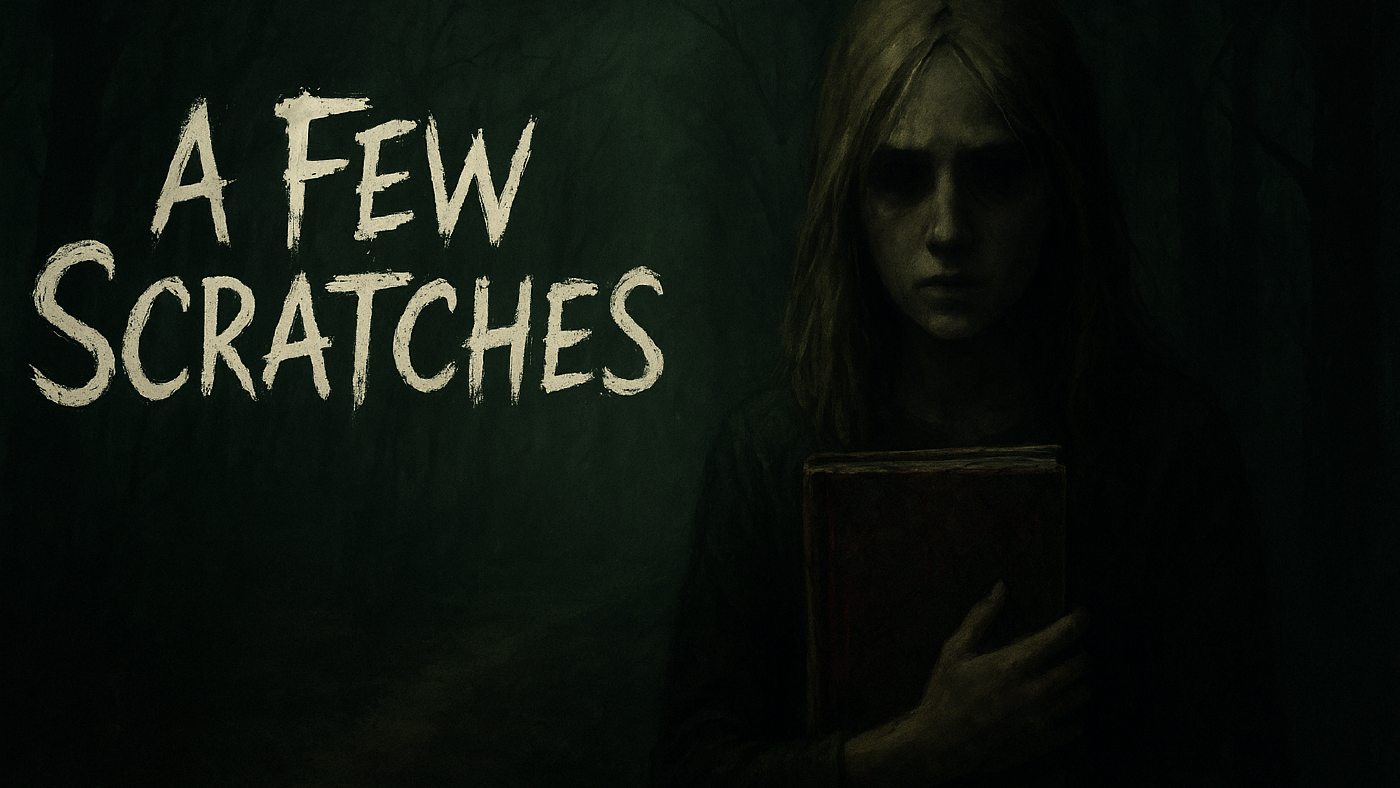
A Few
Scratches

A psychological horror narrative exploring trauma, memory, and the choice between silence and survival.

Genre
Psychological Horror
Inspirations
Silent Hill 2 · Cry of Fear
Endings
4 Unique Paths
Role
Narrative Design & Writing
Scroll

Sarah's Diary

Dear Diary,
Subject: The First Page

Today, I have decided to rewrite the story of my life.

For so long, I thought I could run from my past. That I could leave it behind. But it was always with me; like a shadow, like a stain of faded ink. I've learned I cannot destroy it. But I can learn to live with it.

I opened the door. The light flooded in and illuminated all the scars on the walls, all the ugly words. Did it erase them? No. It just revealed them for what they are: just marks. Part of a story, but not the whole story.

The echoes will remain a part of my story. But today, I choose to write a new chapter.

— Sarah

Core Mechanics &
Narrative Systems

01 ——
Reverse Narrative Structure
The story opens at the end and rewinds. Each chapter peels back another layer of Sarah's past, transforming the player's understanding of choices already made. What reads as guilt becomes context; what seems like violence becomes survival.
Non-Linear Storytelling
02 ——
Voicelessness as Mechanic
Sarah is selectively mute. In place of dialogue, the player chooses her internal monologue — words never spoken aloud. A "Scream" prompt appears during trauma; no matter how many times you press it, only a faint whimper escapes. Powerlessness made interactive.
Accessibility · Emotional Design
03 ——
Psychological Symbolism
Enemies are not random monsters. They are manifestations of guilt and grief — a dog-shaped creature from the crash, glass-shard figures from a broken windshield, a weeping man who runs. Monsters are designed around the father's regrets, not the player's fear of the dark.
Environmental Storytelling
04 ——
Physical Choice Architecture
Branching is not limited to dialogue menus. The player physically confronts or flees key moments. Boss encounters end differently depending on whether the player fights or runs — echoing the Undertale principle: every decision leaves a mark.
Systemic Narrative · Branching

Chapter Structure

Prologue · The Derelict Apartment
A Room Made of Guilt
Sarah wakes in a shattered apartment — a nightmare reflection of her father's house. A radio crackles her father's voice. A knife in her pocket. A pistol on the floor. The player doesn't know why yet. "The only way out is deeper in."
Atmosphere · Inciting Tension
Chapter 1 · Dark Streets
The Aftermath
Sarah flees through a nightmare city. Police sirens blur into her father's silhouette. Loose pages of newspaper reveal fragments of her thoughts. A child's voice whispers from the dark: "Why didn't you protect me?"
Chase · Environmental Storytelling
Chapter 2 · Repeating Houses
Feigning Sleep
The memory rewinds to adolescence. Sarah must hold perfectly still in her bed, controlling her breathing, as her father enters the room. A Sanity Meter drains. A Scream prompt appears — and fails every time. Hidden in the room: a secret hatch into the safety of her own mind.
Stealth · Sanity System · Secret Route
Chapter 3 · The Midnight Market
The Escape Fund
After-hours at a supermarket. Sarah counts coins and reads rental listings — planning her escape. Her dead mother and brother appear at corridor ends, not as threats, but as grief. They watch her try to live.
Puzzle · Resource Management
Chapter 4 · The Happy Home
The Morning Everything Was Perfect
Sarah's ninth birthday. Sunlight. Pancakes. A father who tells bedtime stories. The player builds this perfect memory — choosing Sarah's unspoken words of love — knowing it will end. A hidden gift behind an armchair unlocks the secret ending path.
Memory Triggering · Unspoken Words System
Finale · The Chain Completed
And So, It Ends / Begins
Sarah returns to the opening apartment. The gun is now encased in ice — her frozen pain. Two final diary phrases glow. The player's choices across all chapters determine which paths are available. This is not a menu: it is reckoning.
Choice Architecture · 4 Unique Endings

The Final Choice

Every ending flows from the player's physical choices throughout the game — not from a menu, but from moments of confrontation or surrender across all five chapters.

Finale — The Frozen Apartment
"The pen hovers above the last page. Two phrases glow in the dim light."

The Cast

Protagonist
Sarah Reid
22 years old · Selectively mute · C-PTSD
Pale, hunched in oversized hoodies — psychological armor. Hands that won't stop trembling. Hyper-observant; she notices what others miss. Though physically silent, her internal voice is eloquent and devastating.
Shattered Victim → Reluctant Survivor → Integrated Whole
Antagonist / Monster
Richard Reid
48 years old · Former engineer · Functional alcoholic
Bloated face, broken capillaries, a burn scar on his right palm from the crash. He was a father who read bedtime stories — before grief turned into self-loathing he aimed at Sarah. The truth he cannot face: he was driving too fast that day.
Loving Father → Self-Loathing → Projection of Guilt
Memory Ghost
Seraphina Reid
40 years old · Former art teacher · The Family's Center
Always in her blue silk scarf, carrying faint lavender and oil paint. Sarah has idealized her into perfection — but she managed her own depression in secret, and she knew about Richard's drinking before the accident.
Beacon of Hope → Idealized Ghost → Complex Truth
Guilt Manifestation
Michael Reid
Forever 6 · Green dinosaur shirt · One-eyed bear "Captain"
A freckled boy with a missing front tooth. As Sarah's sanity fractures, Michael's appearances grow more distorted. He shifts from distant laughing child → accusing ghost → forgiving presence. His voice is children's laughter that melts into choked sobs.
Distant Memory → Accusation → Forgiveness